Last month we took a team from the Canadian Foodgrains Bank out to visit our Agricultural and Livelihoods project with long term MCC partner Organization To Develop Our Villages. We spent two days visiting ‘old’ farmers who are graduating from the project this year.
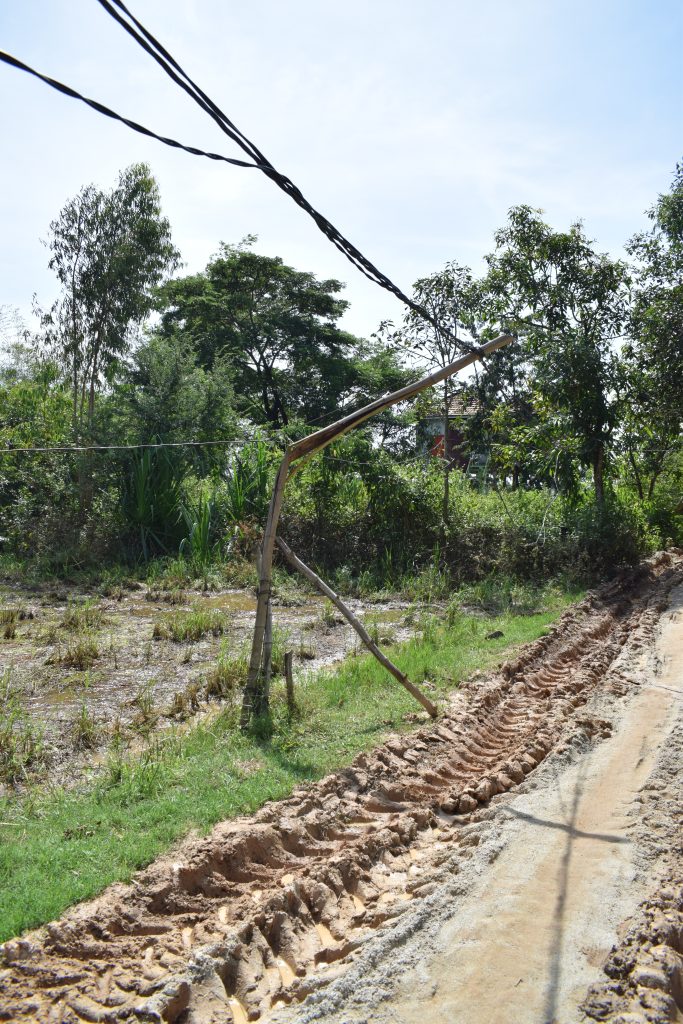
These farmers were all living below the poverty line and going hungry for several months each year when they joined the project five years ago. Through the project they’ve learned new conservation agricultural techniques like cyclical farming and composting, while being invested in each other’s success through village saving groups, agricultural cooperatives (independent legal entities that the farmers jointly own), and technical teams (training villagers to train other villagers). There are also project activities on nutrition and food preparation, hygiene, gender based violence prevention, and conflict management.
One of the graduating farmers that we visited was Mr. Song Pray in Mesang district, Prey Veng province. Song Pray is now part of his Agricultural Cooperative’s Technical Team who trains others on Fishponds and Chicken raising. He also has a large composting opportunity and uses the all natural fertilizer it produces for his vegetable gardens and rice fields.
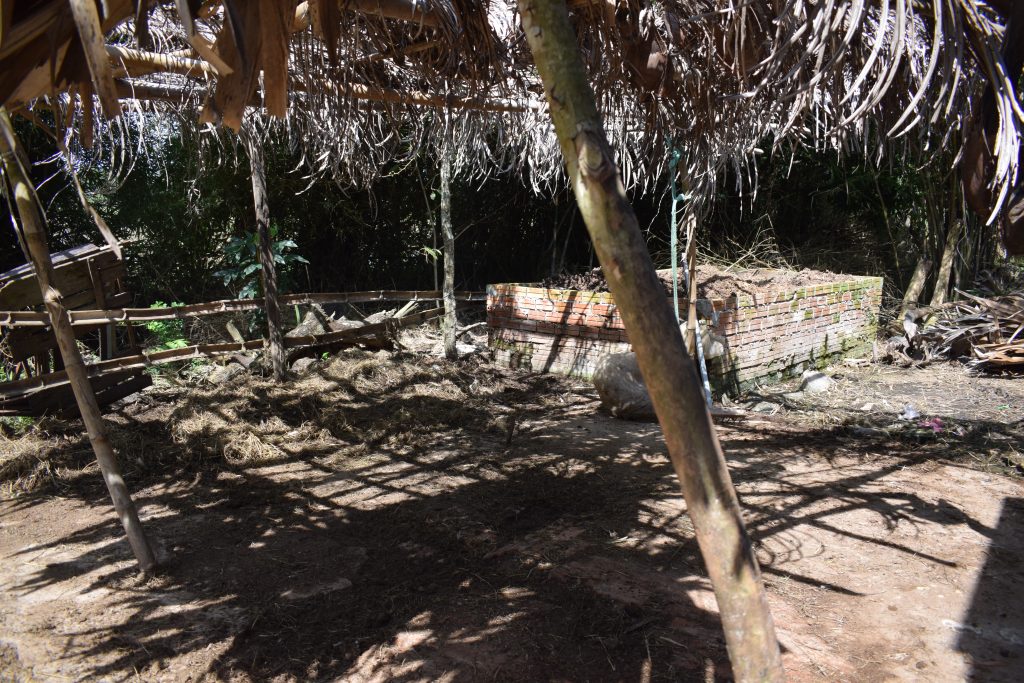
Song Pray’s composting area usually has a large pile of ready-to-use compost under the shelter but he just applied this to his rice fields in preparation for planting. He turns the “hot” compost periodically until it’s ready for use.
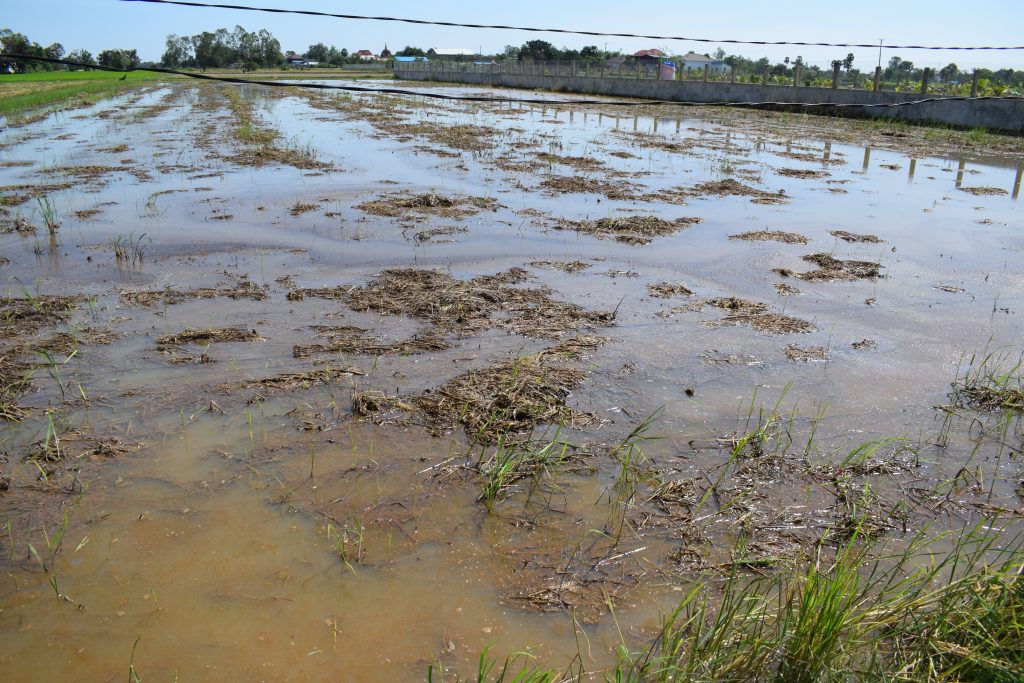
Song Pray’s rice fields may look messy due to being mulched and fertilized with his homemade compost, but this practice greatly promotes soil health and climate resilience. Chemical fertilizers and pesticides, especially when overused, can result in toxicity and reduced biodiversity. The added biomass also promotes water conservation and carbon soil sequestration.
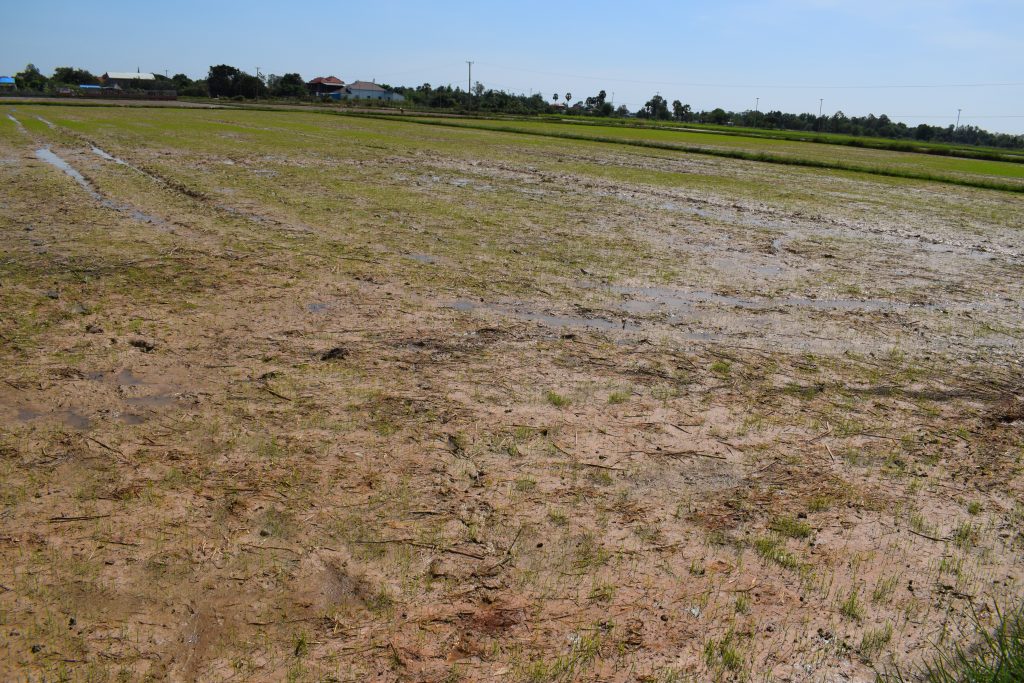
As the soil settles – absorbing the compost and mulch – it starts to look less messy and more alive with potential.
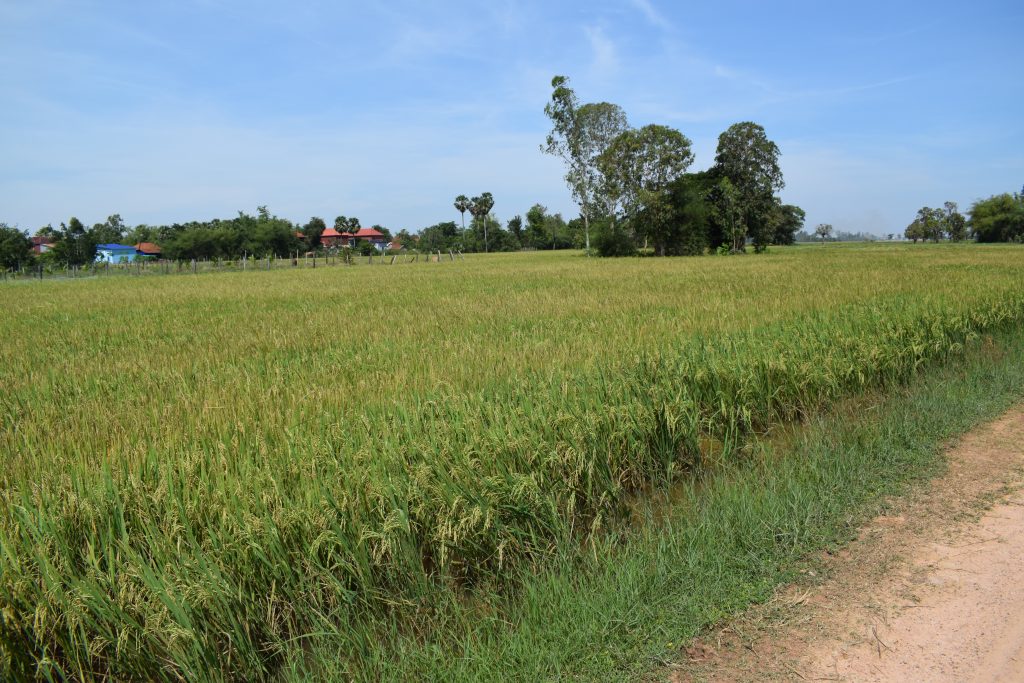
The final result is a vibrant healthy rice field that’s bursting life not only on the surface but also in the murky waters and rich soil below.
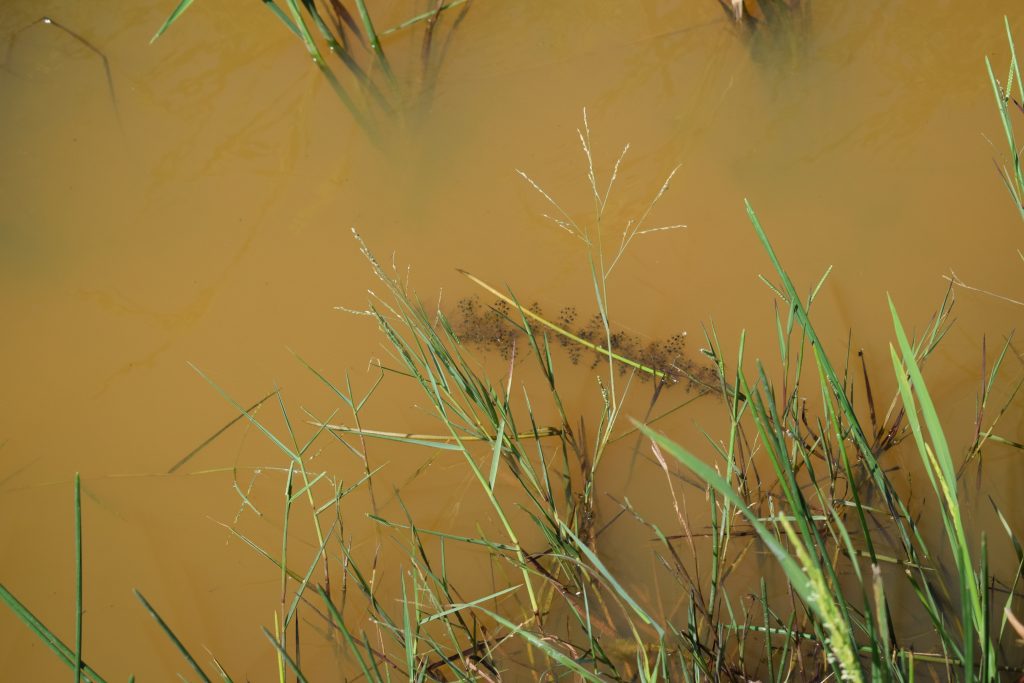
Chemical fertilizers and pesticides, especially when overused, can result in toxicity and reduced biodiversity. Rice fields with natural compost may be messier but a rich array of life – including frogs – emerges out of that messiness.

One of Sony Pray’s cows grazes on a harvested rice field by a rice field that’s recently been fertilized with compost partially made from cow dung. We could call this the real circle of life? But I don’t think Disney will be making a musical about it.
After a couple of years, Song Pray’s neighbors noticed the benefits of composting and mulching on his rice fields so they started to buy/trade with him for compost and some started to compost themselves.
Sounds terrific! Maybe they can come train some North American farmers!
This is a great story, and pictures, that illustrate a profound and joyful truth: new life emerges out of the mess and death of life! May God continue to surprise you and all of us with the joy of new life this holy season!
Thank you for sharing this story!